

PATIENT GUIDES / WISDOM TEETH
Wisdom teeth don't always need to come out. When they do, knowing the cost and what recovery looks like makes it easier to plan.
Your dentist may recommend removal if a wisdom tooth is causing pain, infection, decay or damage to nearby teeth, or if it's stuck under the gum (impacted). At Capital Dental, removal usually costs $300–$600 per tooth, depending mostly on how difficult it is. Sedation costs extra. Most people feel close to normal within about a week.
This guide explains when removal is recommended, what affects the cost, what recovery is like and where to get help with costs. It's general information. Your dentist will assess your own teeth.
01 / THE BASICS
What are wisdom teeth?
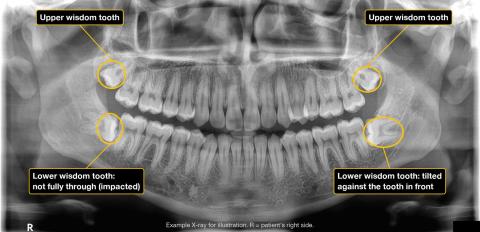
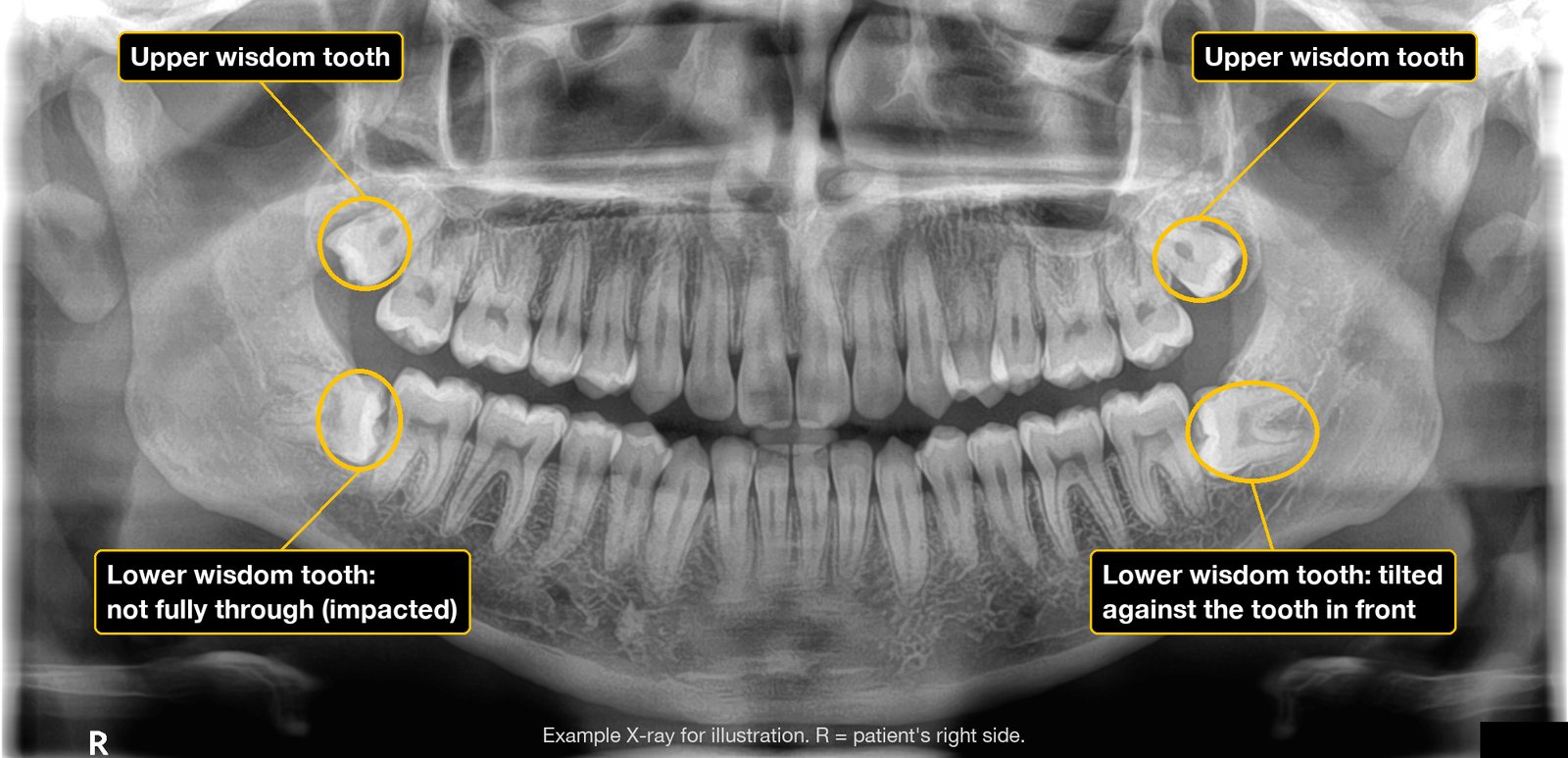
Wisdom teeth are the third molars at the very back of your mouth. They usually come through between your late teens and mid-twenties. Some people have all four, some have fewer and some have none. Often there isn't enough room for them, so they grow at an angle or stay partly under the gum.
02 / WHEN
When do wisdom teeth need to be removed?
Your dentist may recommend removal if a wisdom tooth is:
- causing repeated pain, swelling or gum infection (pericoronitis)
- decayed and hard to clean or restore
- damaging or pushing against the tooth in front
- linked to a cyst or other problem seen on an X-ray
If your wisdom teeth are healthy, have come through properly and are easy to clean, they may not need to come out. A check-up and X-ray will show which applies to you. Read more about wisdom teeth extractions at Capital Dental.
03 / COST
How much does wisdom teeth removal cost in NZ?
The cost depends on:
- How difficult the removal is. A tooth that has fully come through is usually simpler than one that's impacted under the gum or bone.
- How many teeth are being removed, and whether they're removed in one visit.
- X-rays. A panoramic X-ray (OPG) is often needed to plan the removal.
- Sedation. Local anaesthetic is standard. Happy gas (nitrous oxide), oral sedation or IV sedation adds to the cost.
Removing a wisdom tooth usually costs $300–$600 per tooth, depending on how difficult it is. A tooth that has come through normally is at the lower end. An impacted tooth that needs surgery is at the higher end. X-rays and sedation cost extra. These are a guide only. Your actual cost depends on your treatment, so ask for a written quote after your assessment.
04 / SUPPORT
Is there any help with the cost?
Public support
- Work and Income: if you're on a low income and need the tooth out urgently, a dental Special Needs Grant may help with extractions. It's up to $1,000 in any 52-week period, if eligible. See our WINZ dental quotes guide.
- Community Services Card: Health NZ's hospital oral health service in Wellington offers a limited service for cardholders in the region who have toothache and can't afford private care. Call at 8am on a weekday for a same-day appointment. Places are limited. Kenepuru Community Hospital: 04 978 2871.
- Under 18: eligible teens get free basic dental care from Year 9 until their 18th birthday. This includes removing teeth badly affected by decay. Removing impacted wisdom teeth isn't on the standard list, so ask us whether it's covered in your teen's case. Capital Dental provides free dental care for eligible teens.
Other options
- Health insurance: some policies cover oral surgery. Check your policy before booking. We offer Southern Cross Easy Claim.
- ACC: ACC helps with dental injuries caused by an accident. Routine wisdom tooth removal usually isn't an ACC claim.
- Payment plans: see our payment options.
05 / ON THE DAY
What happens on the day?
- Numbing
Your dentist numbs the area with local anaesthetic. If you've chosen sedation, you'll also have that.
- Removal
Most people feel pressure during the removal. Tell your dentist straight away if anything hurts. If the tooth is impacted, the dentist may need to make a small opening in the gum, and sometimes divide the tooth into pieces to remove it more gently.
- Stitches and gauze
Dissolving stitches may be placed. You'll bite on gauze to help a blood clot form.
- Aftercare
We'll go through aftercare with you and give you written instructions. If you have sedation, you'll need an adult to take you home.
06 / RECOVERY
Recovery: what to expect day by day
| When | What's normal | What helps |
|---|---|---|
| First 24 hours | Some bleeding, numbness wearing off, mild to moderate soreness | Bite on gauze, rest with your head raised, cold pack on the cheek. Don't rinse, spit, use straws, smoke or drink alcohol |
| Days 2–3 | Swelling and stiffness are usually at their worst | Pain relief as advised by your dentist, gentle warm salt-water rinses after meals (from 24 hours after the removal) |
| Days 4–7 | Swelling goes down; you can open wider | Soft foods, gentle brushing near the area |
| After about a week | Most people feel close to normal | Back to your usual foods if comfortable |
Everyone heals differently, and lower or impacted teeth can take longer.
What can I eat after wisdom teeth removal?
For the first few days, choose soft, lukewarm foods that need little chewing: yoghurt, soup (not hot), mashed potato or kūmara, scrambled eggs, smoothies eaten with a spoon (not a straw), porridge and pasta. Avoid crunchy, spicy or very hot food, small seeds and alcohol until the area has settled.
What is dry socket?
Dry socket happens when the blood clot in the socket doesn't form or comes loose. It's more common after lower tooth removal and in people who smoke. It usually shows up 3–4 days after the removal, as pain that gets worse instead of better, sometimes with a bad taste. Call us if you think you have dry socket. It's treatable, usually with a medicated dressing placed in the socket.
07 / THINGS TO KNOW
Does wisdom teeth removal have risks?
All surgery has some risk. Possible problems include bleeding, infection, dry socket and, rarely, nerve irritation that causes numbness or tingling in the lip, chin or tongue. This is usually temporary. Your dentist will explain the risks for your teeth, based on your X-ray, before you decide.
08 / YOUR QUESTIONS
Common questions about wisdom teeth removal
How much does wisdom teeth removal cost at Capital Dental?
Usually $300–$600 per tooth, depending on how difficult the removal is. X-rays and sedation cost extra. Ask for a written quote after your assessment.
Can I have wisdom teeth removed while asleep?
We don't offer general anaesthetic. We offer local anaesthetic, happy gas (nitrous oxide), oral sedation (a tablet taken before your appointment) and IV sedation at our The Terrace clinic. IV sedation makes you very relaxed and drowsy, and many people remember little of the procedure. If you're anxious, tell us when you book.
How long does the removal take?
It depends on the tooth. A simple removal can be quick, while an impacted tooth takes longer. Your dentist will give you an idea at your assessment.
Should I take time off work or study?
Many people plan 1–3 days off, especially after surgical removal or sedation.
Do I need all four removed at once?
Not always. Your dentist will talk through the options, including removing only the teeth causing problems.
BOOK AN ASSESSMENT
Find out whether your wisdom teeth need to come out.
If a wisdom tooth is causing pain or swelling, or you'd like to know whether yours need to come out, book an assessment at your nearest Capital Dental clinic. All 12 of our clinics across Wellington and the Hutt Valley remove wisdom teeth, including surgical removals.